
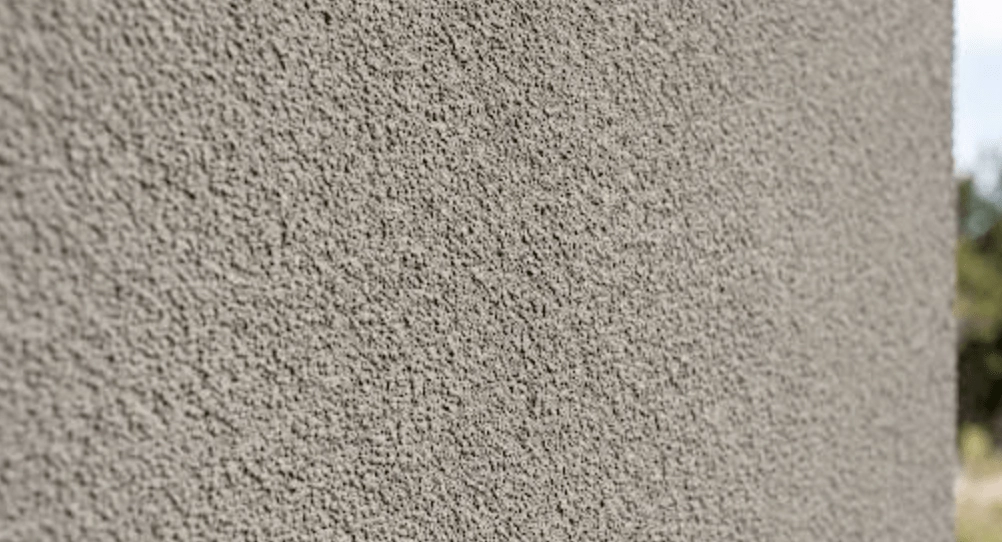
Choosing a Finish Texture in the Stuc-O-Flex Family
Choosing a finish texture can get complicated once it reaches a submittal package. Fine, Sand, Modified, and Putz share one product name, ASTM figures, and a data sheet, but each produces a different appearance and material coverage. This post breaks down those differences and explains where Stucco-Tex and Europlast/Euroseal fit when a project calls for a different finish system.
TLDR
The Stuc-O-Flex Elastomeric Acrylic Finish is manufactured in four textures, Fine, Sand, Modified, and Putz, and the choice between them comes down to aggregate size, application method, and the surface character a project calls for. All four carry the same 105% elongation, 127.9 PSF bond strength (ASTM C-297), and Class A fire rating. Sand is the only texture with a documented coverage rate, roughly 125 to 150 square feet per pail at a nominal 1/16 inch, and functions as the estimating baseline for the other three.
What Are the Four Stuc-O-Flex Finish Textures?
The Stuc-O-Flex Elastomeric Acrylic Finish is a single 100% acrylic polymer product manufactured in four textures: Fine, Sand, Modified, and Putz. Because all four come from the same base chemistry, they carry identical ASTM-verified performance: 105% elongation, 127.9 PSF bond strength per ASTM C-297, an ASTM E-84 Class A fire rating, 2,000-hour accelerated weathering resistance per ASTM G-23-81, and 300-hour salt spray resistance per ASTM B-117. None of that changes from texture to texture. What changes is aggregate size and how the finish is worked onto the wall.
The finish is troweled on and worked with plastic floats, or it can be spray-applied. Spraying sometimes calls for thinning with about 8 to 16 ounces of water per pail to get the right consistency for the equipment. Minimum application thickness across all four textures is 1/16 inch. The finish goes over traditional and one-coat stucco, prepared concrete, masonry, brick, primed metal, EIFS, and fiber-cement sheathings, and it is available in 20 standard colors with custom color matching on request.
| Texture | Aggregate Size (Relative) | Application Method | Coverage | Typical Surface Character |
|---|---|---|---|---|
| Fine | Smallest in the line | Trowel or spray | Not independently documented; plan tighter than Sand | Smooth, low-profile, refined |
| Sand | Fine to medium | Trowel or spray | Approx. 125-150 sq ft per pail at 1/16 in (documented baseline) | Even, consistent, standard commercial look |
| Modified | Medium to coarse | Trowel, heavier float pressure | Reduced versus Sand | More pronounced, visible texture |
| Putz | Largest in the line | Trowel, heavy float technique | Most reduced of the four | Bold, traditional heavy-stucco look |
For a closer look at trowel and spray techniques, see our guide to properly applying elastomeric paint on stucco.
How Does Aggregate Size Change the Coverage Math?
Aggregate size increases from Fine to Sand to Modified to Putz, creating a progressively heavier texture. Larger aggregate also requires more material to achieve the required 1/16-inch minimum thickness, so coverage decreases as texture gets heavier.
Sand is the documented reference point at approximately 125 to 150 square feet per pail. Stuc-O-Flex does not publish exact coverage figures for Fine, Modified, or Putz, so quantities for heavier textures should be confirmed with technical support before ordering.
Application technique also affects the finished appearance. Trowel pressure, float technique, and spray settings can change how the aggregate reads, making consistent application important across large wall planes.
| Coverage Planning Note for Specifiers |
|---|
| Sand covers approximately 125 to 150 square feet per pail at a 1/16-inch minimum thickness. Modified and Putz should be expected to cover less, although exact figures are not published. Spray application may require approximately 8 to 16 ounces of water per pail. |
For color and texture reference samples before finalizing a submittal, see the Colors and Textures gallery.
Which Texture Fits Which Project?
Because all four textures share the same chemistry and performance data, selection comes down to appearance and project fit. Fine creates the smoothest, lowest-profile surface, Sand provides a clean standard stucco texture, Modified adds more visual weight, and Putz delivers the heaviest, most traditional finish.
All four are specified using the same ASTM figures, data sheet, and Stuc-O-Flex elastomeric stucco finish product line.
Some applications call for a different product entirely. The table below compares the four standard textures with those two exceptions.
| Project Situation | Recommended Product | Why |
|---|---|---|
| New construction or full recoat, smooth low-profile look wanted | Fine | Lowest aggregate in the line, most refined surface |
| New construction or full recoat, standard commercial or multi-family | Sand | Documented coverage rate, fastest to estimate and crew |
| New construction or full recoat, more texture wanted without going heavy | Modified | Steps up surface character, coverage reduced versus Sand |
| New construction or full recoat, traditional heavy stucco look | Putz | Largest aggregate, most pronounced surface, greatest coverage reduction |
| Restoring or recoating existing stucco, matching a texture already on the wall | Stucco-Tex | Texture-matching sealant for sound existing substrates rather than a new-texture selection |
| Design calls for a smooth decorative finish instead of a textured one | Europlast and Euroseal | Venetian-plaster-style decorative system, a different product family entirely |
The line between the first four rows and the last two comes up constantly on restoration bids, so it is worth spelling out on its own.
Do the Four Textures Perform Differently?
A specifier reviewing four SKUs under one product name reasonably asks whether a heavier texture trades away any performance to get that look. It does not. Every ASTM figure Stuc-O-Flex publishes for the Elastomeric Acrylic Finish applies to the finish chemistry itself, not to any one texture, so Fine, Sand, Modified, and Putz all carry the identical numbers below.
| Property | Test Method | Result |
|---|---|---|
| Elongation | ASTM testing | 105% |
| Bond strength | ASTM C-297 | 127.9 PSF |
| Fire rating | ASTM E-84 | Class A (flame spread under 25, smoke developed under 450) |
| Accelerated weathering | ASTM G-23-81 | 2,000 hours, no deleterious effects |
| Salt spray resistance | ASTM B-117 | 300 hours, no deleterious effects |
Note: one published Stuc-O-Flex spec sheet lists tensile bond strength as 97.9 PSI. That figure is incorrect. The governing finish data sheet documents 127.9 PSF per ASTM C-297, and that is the number to carry into a specification.
When Does a Project Need Stucco-Tex Instead of a Finish Texture?
Stucco-Tex sits outside the four-texture lineup entirely, and that distinction is worth calling out directly because the two get confused on restoration bids. It is a textured acrylic sealant, not a coating, built to restore and unify an existing stucco surface: filling cracks and holes, blending patched sections, and matching the texture already on the wall so a repair does not read as a repair once it cures. It is meant for structurally sound substrates. If a wall has active moisture intrusion or the substrate itself has failed, that is a diagnostic problem to solve before any surface product goes on, texture-matching or otherwise.
The distinction that matters for a spec: choosing between Fine, Sand, Modified, and Putz is a decision for a project selecting a texture for the first time, new construction, or a full recoat where nothing existing needs to be matched. Stucco-Tex is the answer when the job is recoating or repairing something that is already there, and the goal is continuity with what exists.
Full product details are on the Stucco-Tex product page. For the diagnostic side of that decision, see our guide to crack repair using elastomeric stucco.
Where Do Europlast and Euroseal Fit?
Europlast and Euroseal are a different product family built for a different design intent entirely: a smooth, Venetian-plaster-style decorative finish rather than a textured weathering membrane. Europlast is the pre-colored acrylic plaster itself, and Euroseal is its protective topcoat; together they give exterior or interior walls the appearance of traditional Venetian plaster with the durability and breathability of an acrylic system.
If a project’s design brief calls for texture and depth as an architectural feature, a focal wall, a lobby, a hospitality or institutional entry, Europlast and Euroseal are the family to evaluate, instead of a heavier standard texture like Putz. The two systems solve different problems: the four Elastomeric Acrylic Finish textures are weathering membranes with an aesthetic option built in, and Europlast and Euroseal are decorative finishes with weathering performance built in.
Full detail is on the Europlast and Euroseal product page.
What Site Conditions Affect the Finished Texture?
Every texture in this lineup is only as good as the conditions it goes on in. These requirements apply across all four, and across Stucco-Tex when it is used as a texture match:
- Substrate must be clean, dry, and free of loose or foreign material, rust, mildew, dust, dirt, and oils, removed by high-pressure wash above 3,000 psi, sandblasting, or mechanical bristle brush.
- Substrate moisture content should not exceed 19% at the time of application.
- Ambient and surface temperatures must stay above 40 degrees F during application and through the drying period.
- Typical dry time is 24 hours, and that window extends in low temperatures, high humidity, fog, or mist.
- Never let the finish freeze or take rain exposure while it is drying.
An application that skips any of these does not get to keep the texture it was supposed to have, and it does not get to keep the ASTM figures either, because both assume the finish was installed inside its documented conditions. Moisture management behind the wall assembly matters just as much as surface prep in front of it; for the mechanisms that put moisture into a stucco wall in the first place, see our rundown of common moisture problems in stucco walls.
Frequently Asked Questions
What are the different stucco finish textures in the Stuc-O-Flex line?
The Stuc-O-Flex Elastomeric Acrylic Finish comes in four textures: Fine, Sand, Modified, and Putz. Aggregate size and application method determine the surface character and coverage of each, and all four share the same acrylic chemistry and ASTM-verified performance data.
What is the difference between Sand and Putz stucco finish?
Sand uses a finer aggregate and produces a smoother, more consistent surface, with a documented coverage rate of about 125 to 150 square feet per pail at 1/16 inch. Putz uses the largest aggregate in the line and produces the heaviest, most traditional surface, with coverage reduced relative to Sand. Both carry identical ASTM performance figures.
How does aggregate size affect stucco texture?
Aggregate size is the main variable separating the four textures. Smaller aggregate produces a smoother, lower-profile surface; larger aggregate produces a heavier, more pronounced one. Trowel pressure and float technique interact with aggregate size to shape the final appearance.
When should a project use Stucco-Tex instead of choosing a finish texture?
Stucco-Tex is the right call when a project is restoring or recoating existing stucco and needs to match a texture that is already on the wall. It is a texture-matching sealant for sound substrates, rather than a fifth texture option. New construction or a full recoat that is selecting a texture from scratch should start with Fine, Sand, Modified, or Putz.
What is Europlast, and how is it different from a Stuc-O-Flex finish texture?
Europlast, paired with its topcoat Euroseal, is a Venetian-plaster-style decorative acrylic system, a different product family from the four standard finish textures. It is the right choice when a project’s design intent is a smooth decorative surface rather than a textured weathering finish.
Specify With the Right Texture the First Time
Texture selection inside the Stuc-O-Flex line comes down to three questions:
- Is this a new texture choice or a texture match on existing stucco?
- How much surface character does the design call for?
- Does the coverage math for that texture line up with the quantities on the order?
Fine, Sand, Modified, and Putz answer the first question for new work. Stucco-Tex answers it for restoration. Europlast and Euroseal answer it when the design wants smooth instead of textured. All of it carries the same tested performance data, so getting the texture right is purely a matter of matching the project.
For full specifications and CSI documentation, see our specifications library. For data sheet downloads, see our product data sheets page. To confirm coverage on a specific texture or get help with a submittal, call our technical team at (800) 305-1045.